This Week's Wisdom at a Glance:
WHY THE MASTERS IS DIFFERENT
MONEY AND THE MASTERS
DECADES OF WORK, MOMENTS OF GLORY
The Uniqueness of The Masters
The Masters has always been my favorite weekend in sports.
Every April, the best golfers in the world arrive at Augusta National to compete on the same course, with the same traditions, and the same expectations. It is one of the only major sporting events that never changes venue, which means players are not just competing against each other, but against history itself.
That consistency is part of what makes it so special. It is also what makes it so difficult.
Players spend years learning the course. They study the slopes of the greens, the angles of approach shots, and the decisions required on each hole. Many will tell you it takes multiple attempts just to understand how to play Augusta, let alone ever be in contention.
In fact, the average Masters winner is in their early to mid-30s and often playing in their seventh to ninth tournament appearance. Experience matters here in a way it simply does not at most other events.
For most professional golfers, winning The Masters is not just another tournament. It is a career-defining goal they have been working toward for decades.
The Economics Behind Augusta
Behind all of that tradition is a fascinating economic engine.
In 2025, the total prize purse reached approximately $21 million, with the winner earning over $4 million.
But the real story is not just the prize money.
Masters merchandise has become one of the most remarkable revenue stories in sports. Estimates suggest roughly $70 million in merchandise sales during tournament week, which works out to about $10 million per day, or over $400,000 per hour while the grounds are open.

And the most interesting part is that you can only buy that merchandise on-site. A hat or a polo becomes more than just apparel, it becomes proof that you were there.
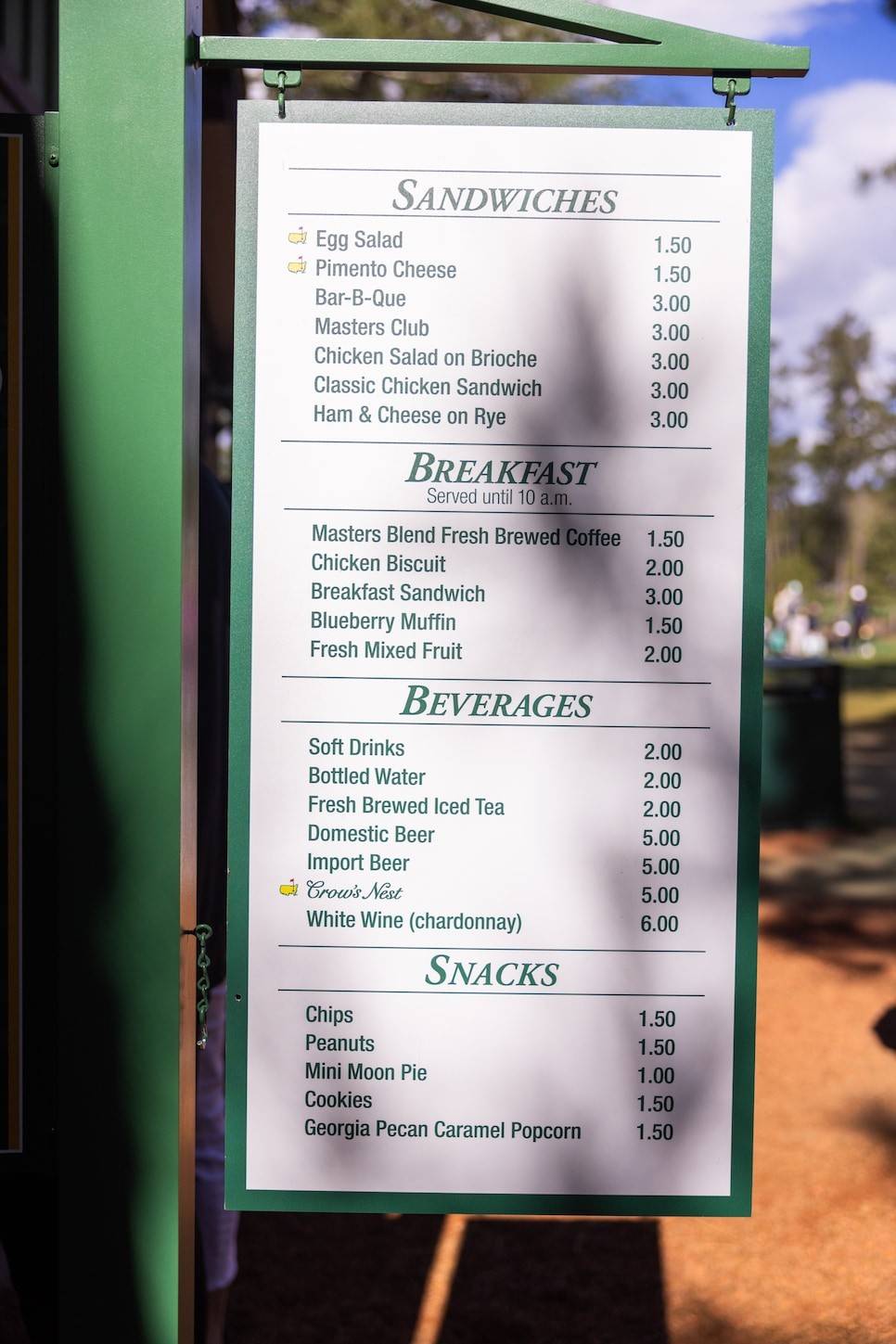
At the same time, Augusta holds tightly to traditions that feel almost out of place in today’s world, such as no phones or technology of any kind allowed for spectators and menu prices stuck in the past.
You can still get a pimento cheese sandwich for around $1.50, an egg salad sandwich for about $3, and a Georgia peach ice cream sandwich for just a few dollars. Even a beer costs less than what you would expect at almost any other major sporting event.
And then, in contrast, there is the Champions Dinner.
Each year, the defending champion hosts a private dinner for past winners, featuring an elaborate and highly curated menu. This year’s dinner even included an exclusive wine list, with one bottle reportedly topping out at $1,800, sourced directly from Augusta’s private cellar.
It's quite the balance, an event generating tens of millions of dollars in a single week, serving both $1.50 sandwiches and some of the most exclusive dining experiences in sports, all while maintaining a sense of consistency and intention.
Discipline, Planning, and Playing the Long Game
What stands out most about The Masters is not the money, it’s the preparation needed.
Augusta demands a unique skill set. Precision over power. Patience over aggression. The ability to manage risk, understand the course, and make good decisions when the margin for error is razor thin.
These players are not just talented, they have spent decades refining their craft, often playing golf for 20 to 25 years before ever having a real chance to win.
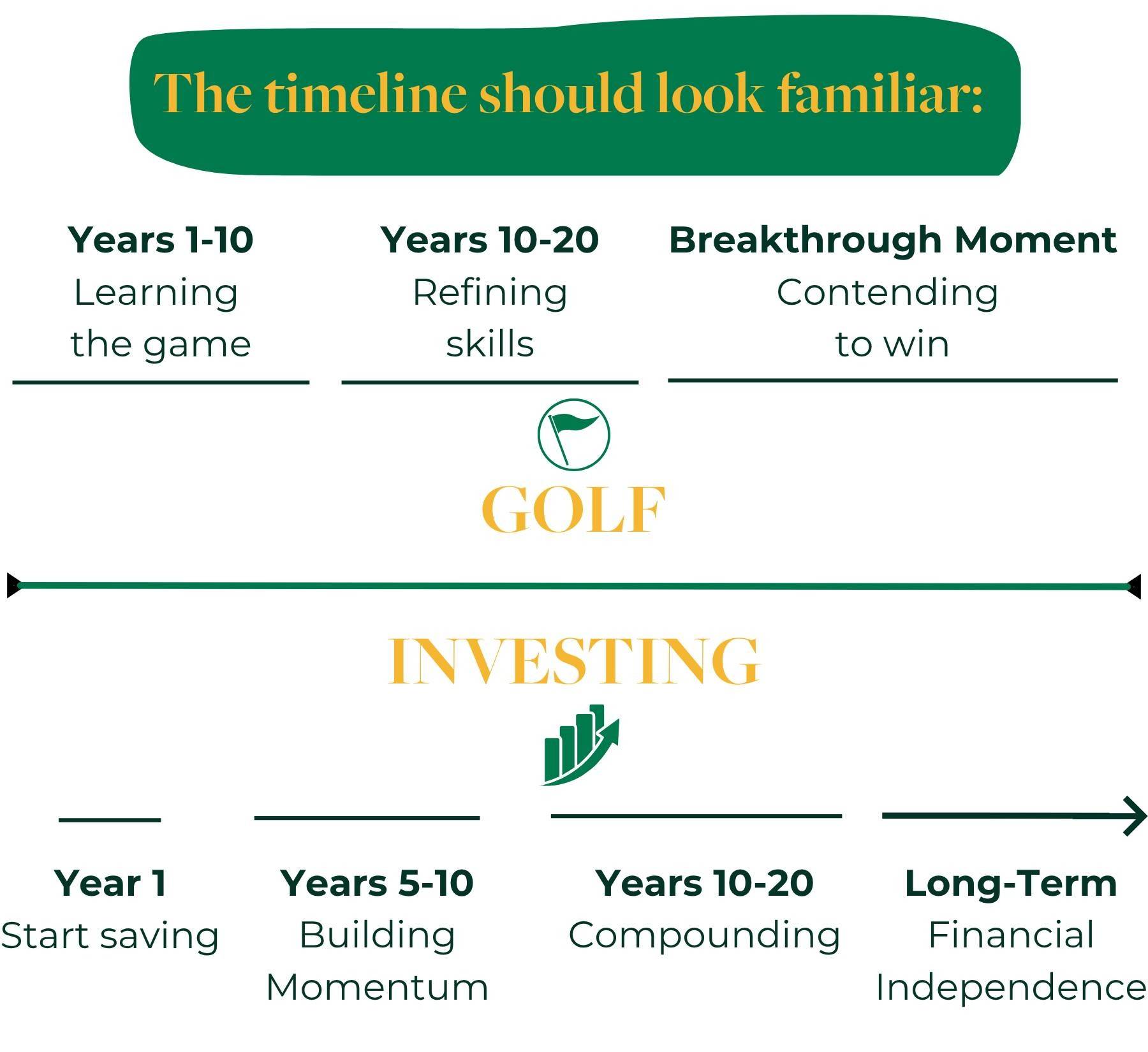
Most of the goals we help clients achieve are not one- or two-year objectives. They are goals that take seven, ten, sometimes twenty years or more of consistent saving, thoughtful investing, and disciplined decision making.
Along the way, progress can feel slow. At times it may not feel like much is happening.
But just like Augusta, the results are being built long before they are seen. You do not wake up one day ready to win The Masters. The same way you do not wake up one day having achieved financial independence or reached a major life goal.
Both are the result of preparation, consistency, and staying committed to the process long enough for the opportunity to meet you when you are ready.
The reigning champion this year is Rory McIlroy.
My son, Rory, was watching the tournament with me last year and asked if I had ever played Augusta National. I told him I have not, but if he keeps practicing, maybe one day he will.
As soon as I finished saying that, he walked straight out to the backyard, grabbed a club, and started hitting balls into our golf net.
It was a simple moment, but it captured the whole idea.

There was no focus on winning. No concern about how long it might take. Just a willingness to start, to practice, and to take the next step.
That is how all meaningful goals begin.
Whether it is learning a course like Augusta, building a career, or working toward financial independence, the path is almost always the same. It is built through small, consistent actions repeated over time, long before the results become visible.
So as you think about your own version of Augusta, do not get discouraged by how far away the goal may feel.
Just focus on the next step.
Because in the end, success is rarely about one big moment.
It is about showing up, doing the work, and trusting that over time, those small efforts will lead you exactly where you are meant to go.
Enjoy your weekend,

Daniel Westergaard