This Week's Wisdom at a Glance
LUCK AND RISK ARE SIBLINGS
OWN THE INPUTS, NOT THE OUTCOMES
Wisdom for Life
I have been playing golf for the better part of my life.
I have hit thousands of shots. I have played hundreds of rounds. And in all that time, I have never made a hole-in-one.
Meanwhile, every golfer has heard the story. Someone picks up the game a few months ago, plays their very first round with a borrowed set of clubs, and knocks one straight into the cup on a par 3.
It happens. Not often, but it happens. And when it does, it is tempting to draw the wrong lesson from it.
It is easy to look at that moment and think the beginner did something special. In reality, they got lucky. The swing was probably not sound. The setup was probably not repeatable. But the ball found the hole anyway, and for one shot, it did not matter.
The danger is not the hole-in-one itself. The danger is what we do with the story afterward.
We see someone get lucky, and part of us starts to wonder if we are due for the same thing. We hear about a friend who bought a stock on a whim and watched it triple, and suddenly every ticker feels like it might be our turn. We read about someone who was in the right place at the right time, and we start waiting for our own right place, our own right time, instead of doing the work in front of us.
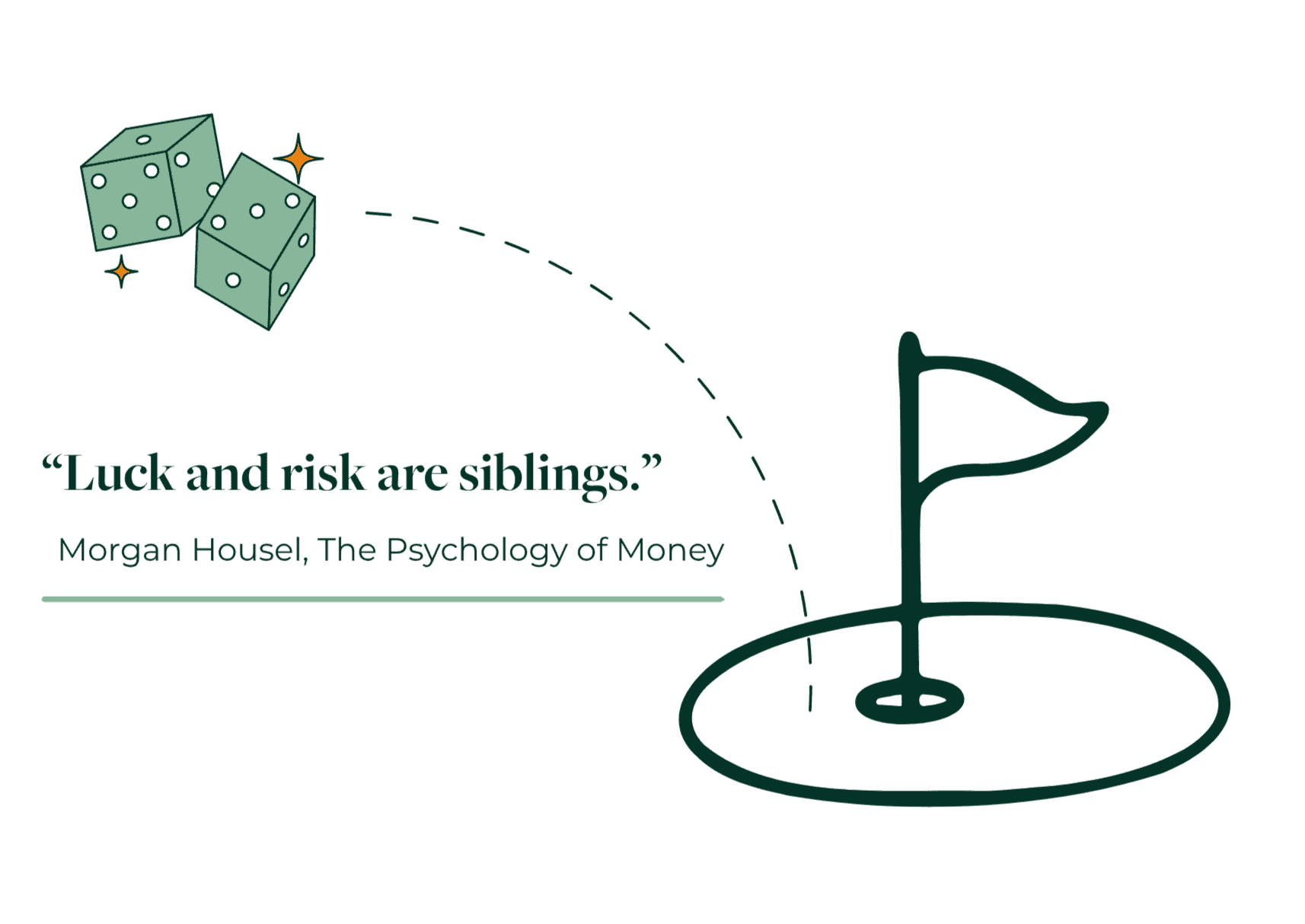
Morgan Housel put it simply in The Psychology of Money: "luck and risk are siblings." They live side by side. You cannot chase one without accepting the other. The same forces that occasionally hand someone a lucky outcome can just as easily take one away, and neither has much to do with skill.
That is not a reason to be cynical. It is a reason to be honest about what we actually control.
We cannot control the market's return in any given year. We cannot control interest rates, inflation, election outcomes, or what headline breaks next week. We cannot control which industries boom or which companies our peers happen to work for, or whether the neighborhood we bought into ten years ago happened to appreciate faster than the one next door.
What we can control is much narrower, and much more important.
We can control the career we choose to build and how much effort we put into growing it. We can control the home we decide to buy, how much of a stretch it is, and how long we plan to stay in it. We can control our savings rate, year after year, regardless of what the market decides to do in any given quarter. We can control how diversified our portfolio is, whether we carry manageable debt, and whether we stick to a plan when the noise gets loud instead of abandoning it because a headline made us nervous.
None of those decisions guarantee an outcome. But they are the inputs that are actually ours to shape, and they matter far more over a lifetime than any single lucky break ever could.
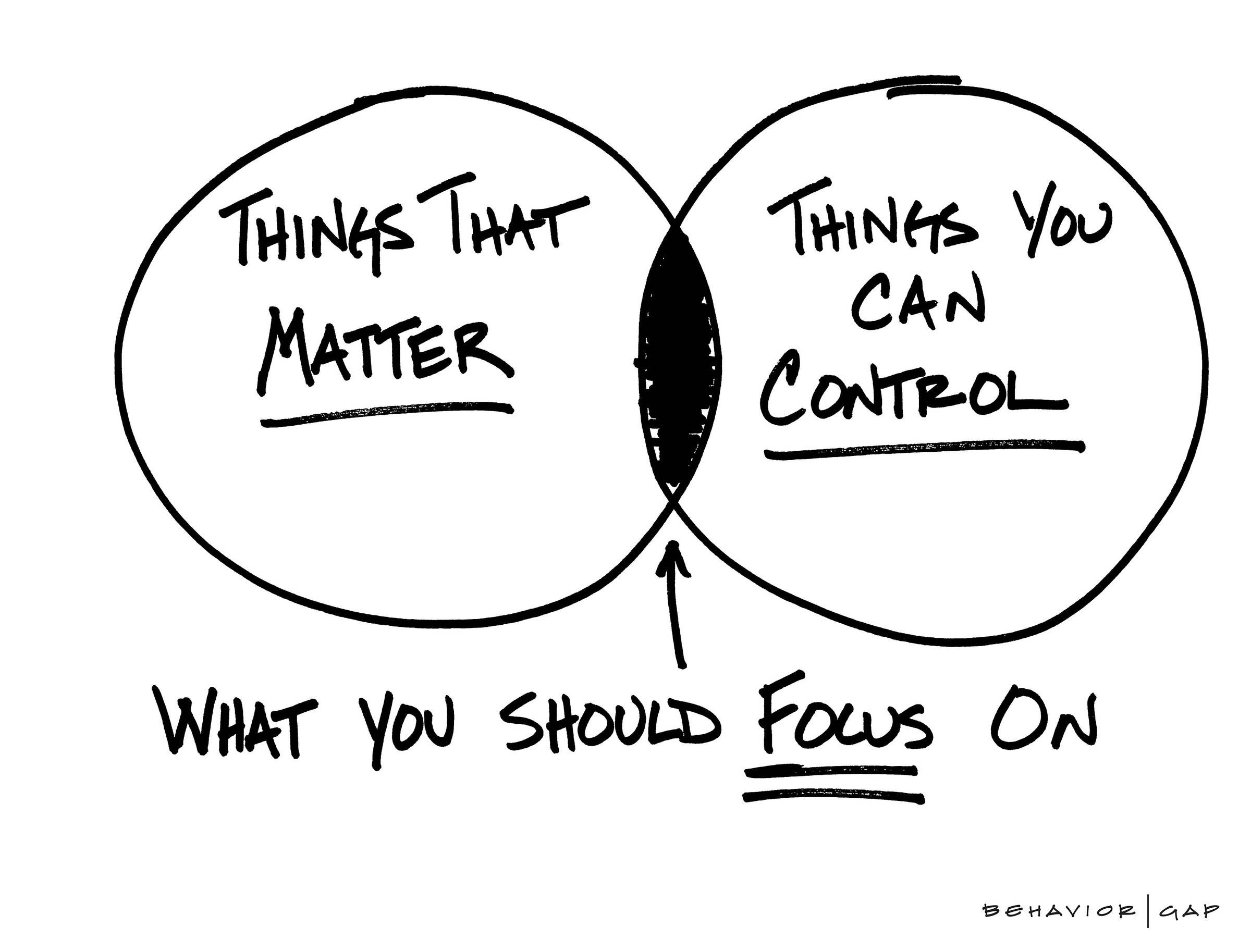
That is the overlap we talk about often with our clients: the space between what matters and what we can actually control. It is a smaller space than most people want it to be. But it is the only space where real progress happens.
The golfer who plays for thirty years without ever seeing a hole-in-one is not doing anything wrong. They are simply playing a game where luck shows up unevenly, and choosing to focus on the fundamentals anyway. The grip. The stance. The swing they can repeat a thousand times. Because that is what actually lowers a score over a season, even if it never produces a highlight-reel moment.
My son Rory is four years old and just starting to learn the game. Every so often he catches one clean, and every so often he does not, and neither one tells me much of anything. What I actually care about teaching him is not the occasional good shot. It is his grip, his stance, and his tempo, the fundamentals that will not show up in any single swing but will decide what kind of golfer he becomes over time.
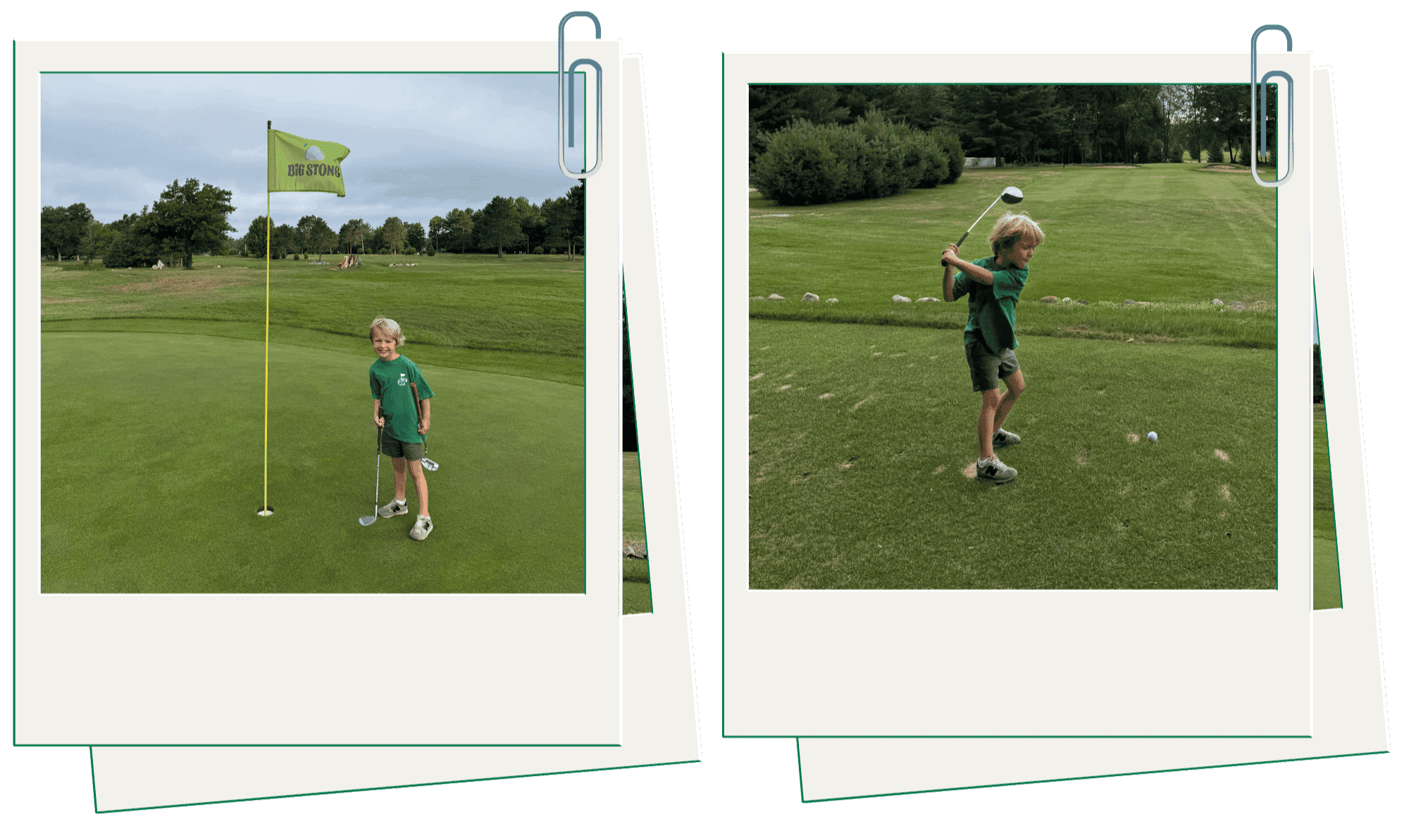
I want him to learn that lesson early, not just for golf, but for life. The good bounces and the bad ones will come and go on their own. What he can control is how well he prepares and how consistently he shows up. The same is true of building a financial life. Nobody remembers the boring parts. But they are the reason everything else eventually works.
Building a life rewards the same mindset. Not the lucky pick, the lucky job offer, or the house that happened to double in value. The unglamorous discipline of choosing well, saving consistently, staying diversified, and letting time do what time does.
Some people will get their hole-in-one. Most of us will not. But the golfer who keeps their fundamentals sound will shoot a good score far more often than the one waiting around for lightning to strike twice.
Focus on your swing. Let the rest take care of itself.
Enjoy your weekend,

Daniel Westergaard