This Week's Wisdom at a Glance:
WIN WITH CONSISTENCY
SWING BIG, MISS BIG
Wisdom for Life
With the first week of baseball officially upon us, I wanted to bring a baseball inspired principle that you can apply to your daily life.

On-base percentage is a stat used to track how often a hitter gets on base. You have to get on base before you can score a run, so it is only logical that teams want to track who gets on base more often, as it would make sense that this would increase your team’s odds of scoring runs.
And wouldn’t you know, the best players of all time at getting on base also happened to be the players that were elite at winning your team games (as measured by the wins above replacement (WAR) statistic).
Ted Williams: .482 on base percentage / ~123 career WAR (wins above replacement)
Babe Ruth: .474 on base percentage / ~183 career WAR (wins above replacement)
Lou Gehrig: .447 on base percentage / ~80 WAR (shortened by ALS) (wins above replacement)

The application to our lives is that focusing on getting on base (i.e. doing the seemingly simple things on a consistent basis over very long time periods) is the best path to improvement. It may not be flashy, but it works. Many of our clients who have achieved financial success have not done it via “home runs” (i.e. having big, one-time occurrences that lead to financial success). Instead, more often than not it was these simple (but sometimes difficult) habits:
Consistently spending less than they made
Investing consistently over many years
Planning for large purchases as opposed to impulsively acting on whims
Staying grounded in their financial principles and values
i.e. spending on what they valued vs. spending “to keep up with the Jones’s”
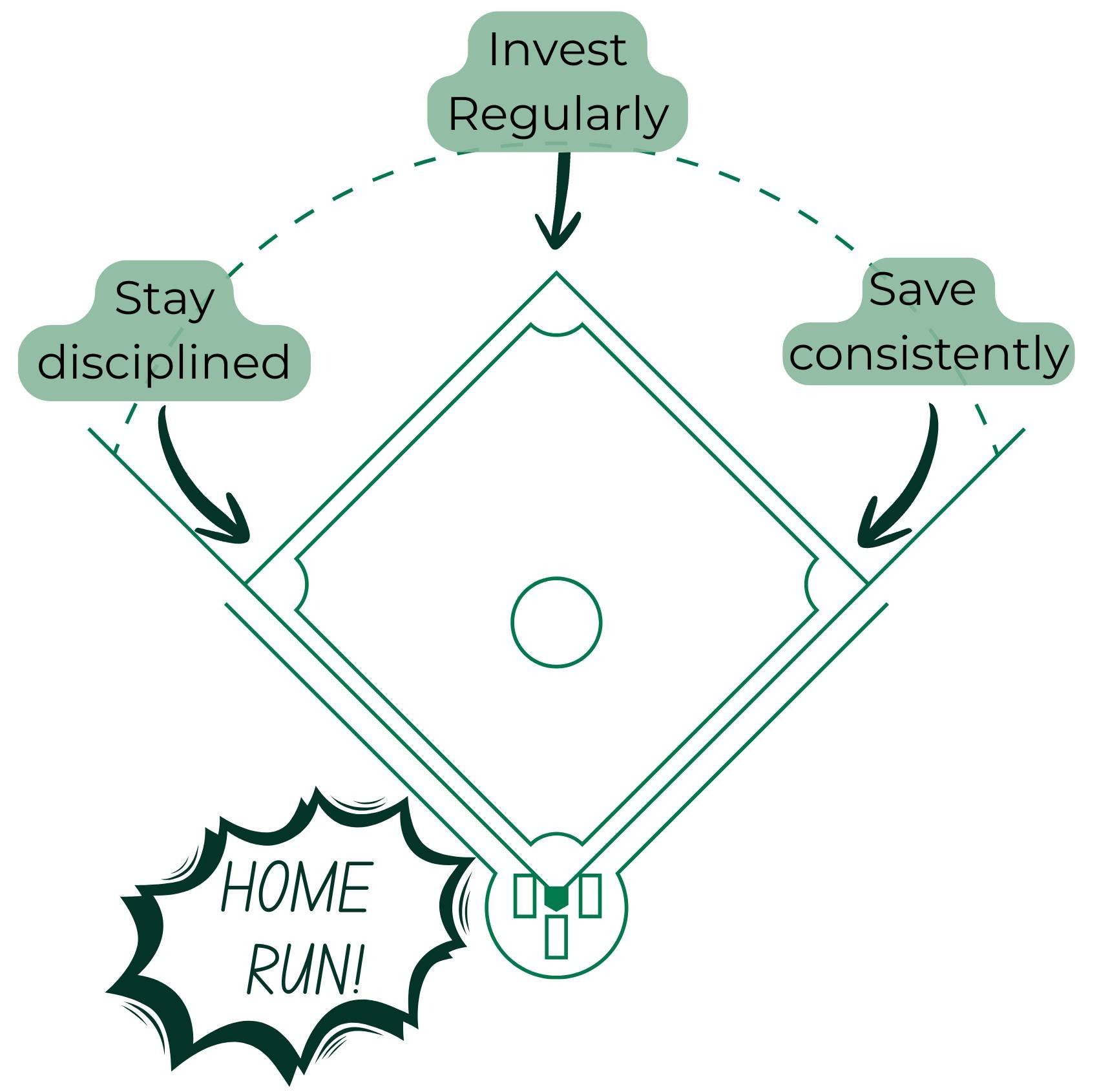
Of course, the flip side of this philosophy is also worth addressing. If you’re focused with “getting on base” (to continue the metaphor), by definition you’re not swinging for the fences. Some examples of swinging for the fences in financial terms are the following:
Taking large bets on single stocks with the hopes of outsized returns
Not saving for years at a time, with the thought of “I’ll do that at a different stage of life”
Taking on too much exposure to private and illiquid investments
Using debt to fund your lifestyle or to make speculative investments
Even worse, using debt to make speculative investments that are illiquid
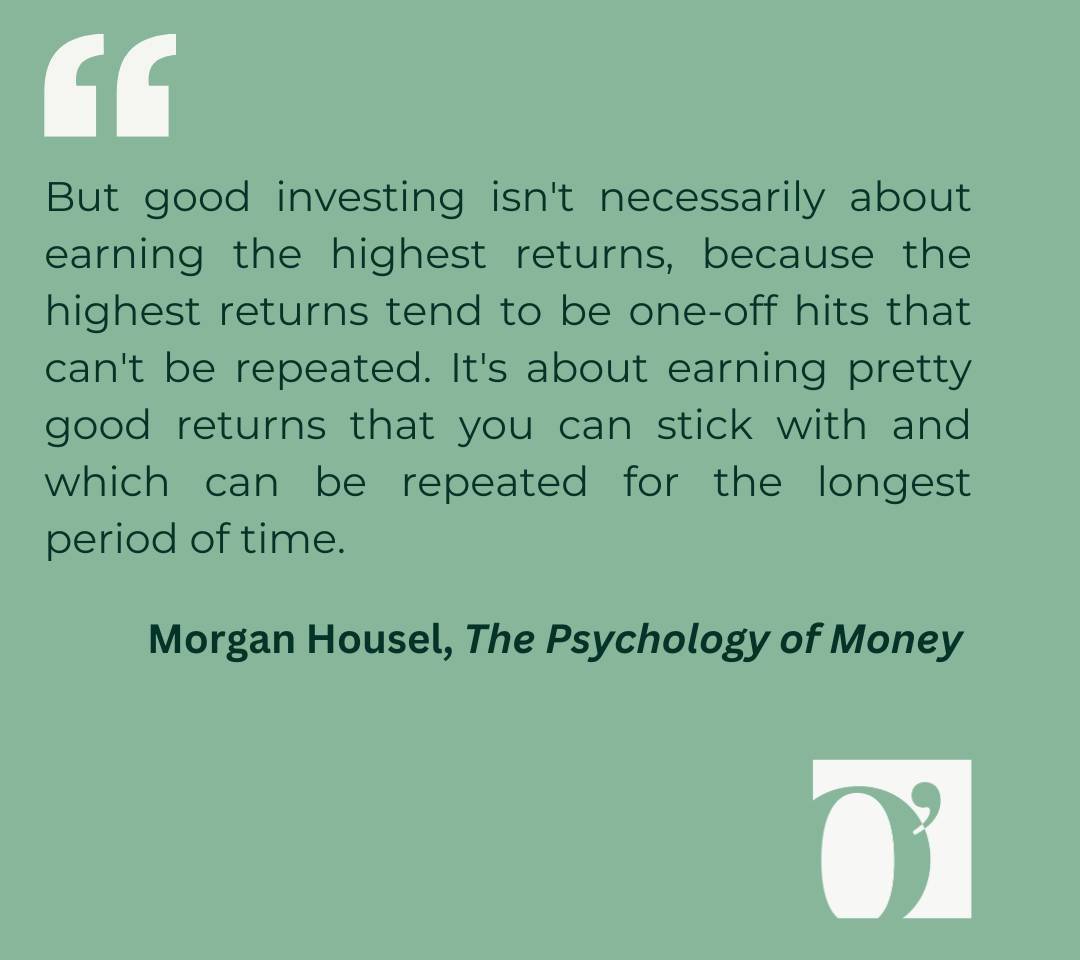
Morgan Housel makes the below statement specifically about investing, but it can be applied to all of personal finance:
Thanks for reading. Go Cubs!