This Week's Wisdom at a Glance
SOCIAL SECURITY: THE REST OF THE STORY
MAKE SURE TO CHECK THE EXPIRATION DATE
MIND THE G.A.P.
Wisdom for Life
Some of our readers of a...particular age...(yeah, that's a wise way to say it) may recall Paul Harvey's radio spots "The Rest of the Story" (full transparency - I'm of that "particular age"). If Paul were here today, he might tell a portion of the story related to social security like this:
The modern pension was first introduced in Germany in 1855. They initially set retirement age at 70 - based on a biblical reference that men would live "3 score plus 10 years" (Psalm 90) which equals 70.
Commentary
At the time, it seemed like a pretty safe number that would result in few pension payments, given that life expectancy in 1885 was 46. There was a 24 year gap between average life expectancy and the start of benefits. What could go wrong? Life expectancy could jump higher - and it has.
1935: Here in the United States, the idea of a pension took hold because of the Great Depression. Initially, retirement was set at age 63. But at that time, the average worker died at age 61 - so the retirement benefit date was eventually changed to age 65 (not sure how they came up with that, but you know, it's the government).
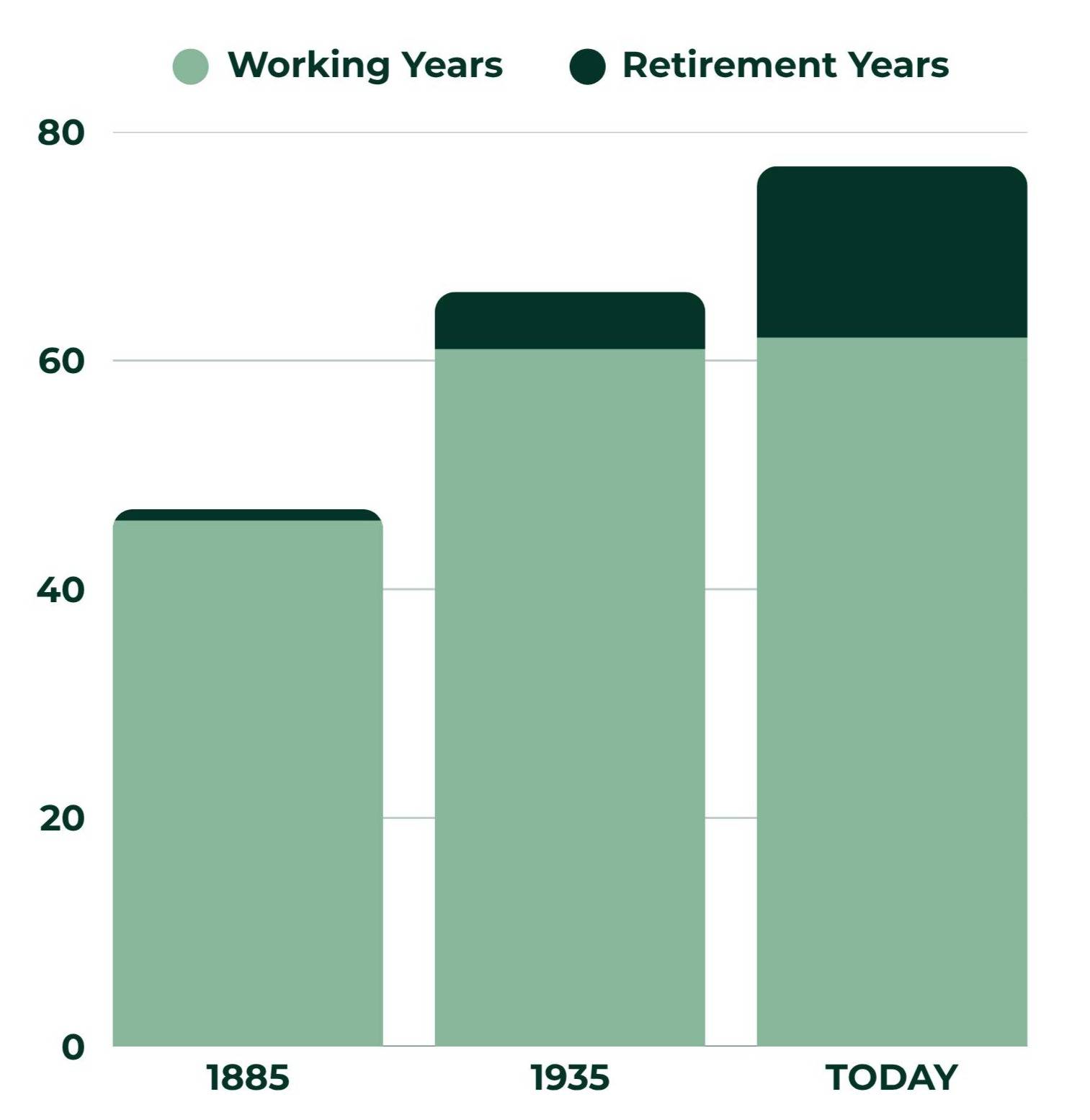
Today, the first date to qualify for benefits is 62, BUT life expectancy is now averaging 78.5! So today, social security is paying benefits for longer than anticipated. This has significant implications for social security as its assets are being swiftly depleted due to human longevity increasing over time. This has broader implications for our lives.
Wisdom for Money
But pensions of all kinds have given rise to another - unanticipated - implication for the lives of people living with those pensions. Just when does the useful life of a worker end? When should it end? Should people work with an expiration date?
Troubling Trends
Growing prosperity around the world has increased the number of people able to live many years after leaving the ranks of the employed. There's evidence that this is not always good for people as things such as divorce, alcoholism, suicide and depression are on the rise amongst this group. There's another aspect of these challenges that has been labeled the friendship recession. This refers to the difficulty many have in making and keeping friends, especially after a life of going to work which became, for many, one of the primary communities for career workers. Many newly retired find that they never cultivated the skills to build community apart from their work environment. As a result, many have learned a difficult truth...
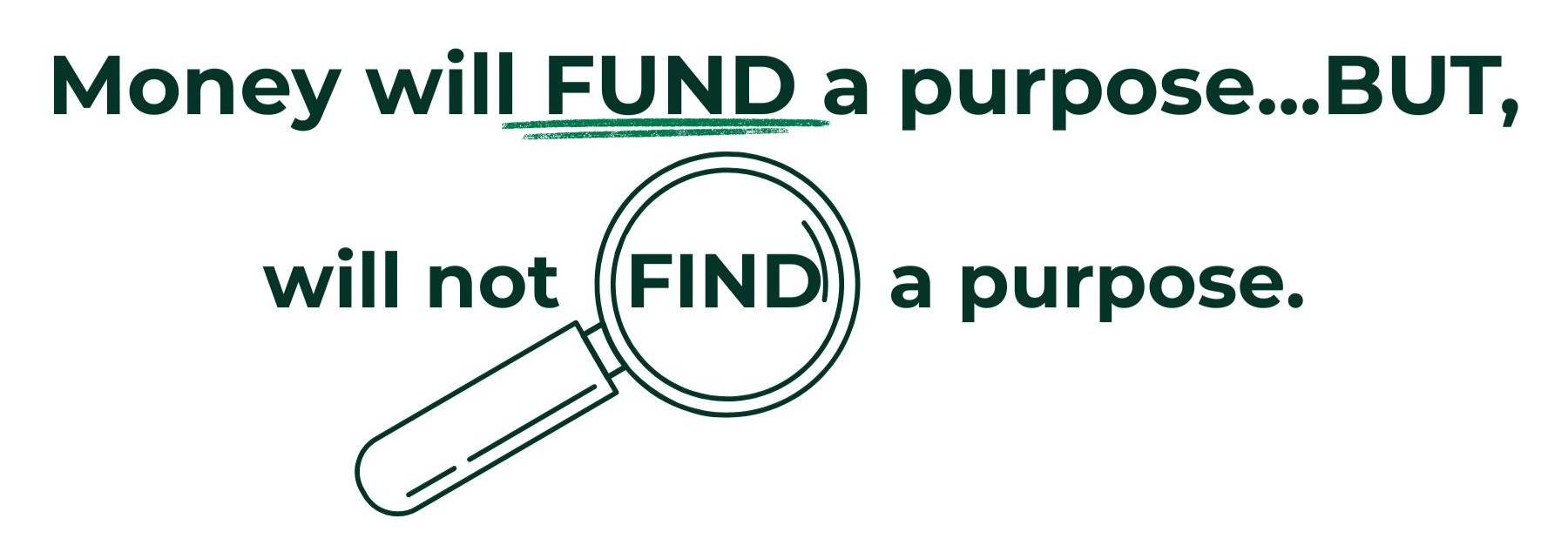
If a large portion of one's life has been given to raising children and pursing a career - and now the kids are grown and the job is done - the missing piece of a life's puzzle is purpose. In its absence the aforementioned challenges can move in like an unwanted house guest.
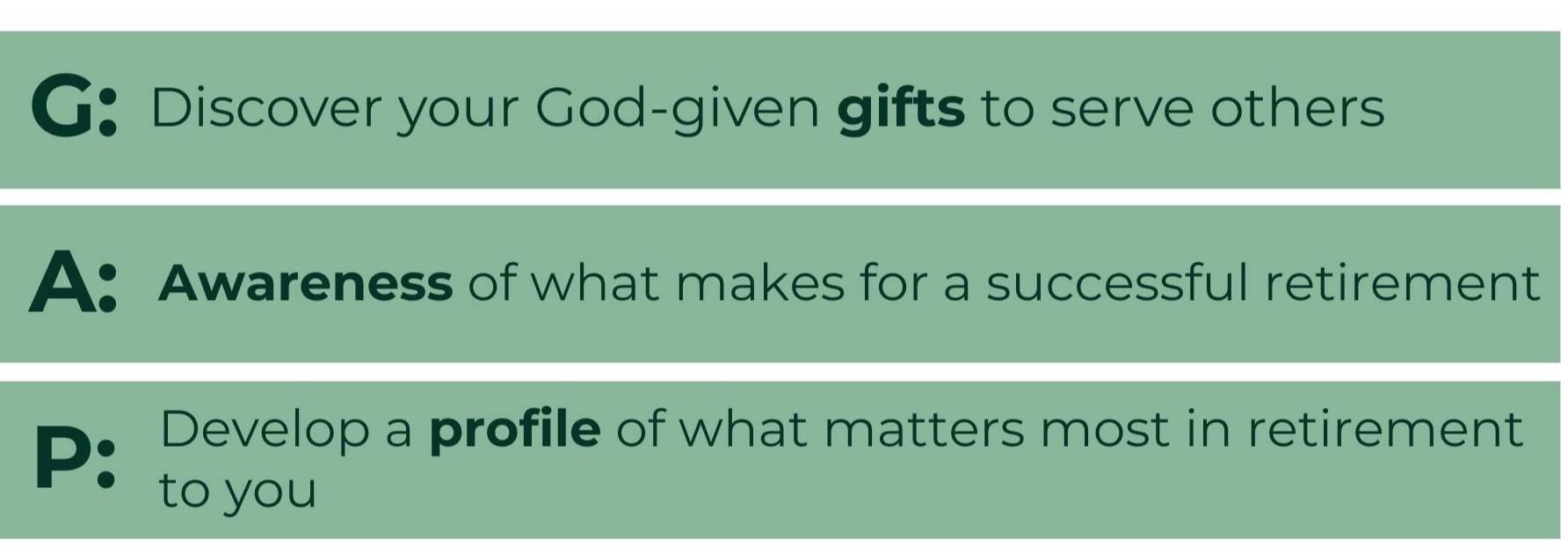
What to do? As they say in London, mind the G.A.P. The G.A.P. is a retirement awareness tool that can assist the preparation of those transitioning into retirement. It looks like this:
Someone once said, many people spend more time planning a vacation than retirement. The stakes are too big for that approach.
Want help "minding the G.A.P."? Call us; we can coach you through the process.
Thanks for reading,
Tim O'Connor